
Terao Magonojo and the Work of Transmission
The Book of Five RingsThis thread traces the book’s movement from Musashi’s personal practice toward a disciple’s reception of a strategic teaching.
increasing Bearing strength in each event
 decreasing
Bearing strength in each eventdecreasingA School Named

Naming a Tradition
Niten Ichi-ryū
Miyamoto Musashi identifies the strategy he explains as the Way of Niten Ichi-ryū. Naming it gives the teaching a recognizable lineage and a set of principles to study.
Practice Before Inheritance
The name alone cannot convey mastery. Musashi repeatedly insists that the student must train until the principles become embodied.
The Needle and Thread

Teacher and Student
A Linked Craft
Musashi compares teacher and disciple to needle and thread: the teacher opens a route, while the student must follow through sustained practice.
Limits of Instruction
The metaphor makes transmission active rather than automatic. A lesson has value only when the learner carries it through repeated work.
Body as the Record

Teach the Body
Beyond Memorization
The book warns that reading, memorizing, or imitating its words will not bring the Way. The student must absorb strategic understanding internally and physically.
A Testable Inheritance
This demand protects the teaching from becoming a mere slogan. Its continuity depends on practice that can be enacted, not only repeated.
A Named Recipient

Terao Magonojo
The Colophon
The closing lines name Terao Magonojo after giving the date. This brief appearance situates the work within a relationship of teaching and reception.
The Student’s Responsibility
The text does not narrate the disciple’s later life. Its instruction nonetheless makes clear that the recipient’s task is to continue learning through diligent study.
Continuation Through Study
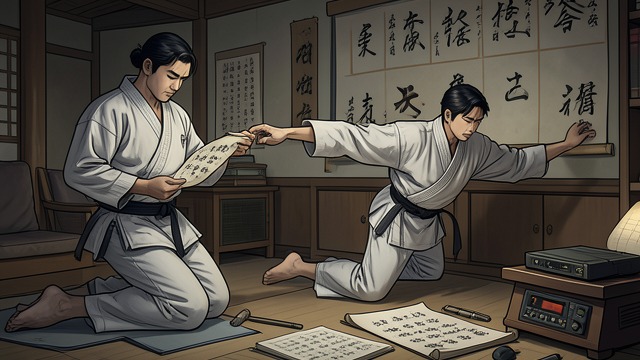
An Unfinished Transmission
The Reader’s Part
Musashi tells the learner to study one item at a time and test it in encounters. The Way is passed on through disciplined use rather than passive possession.
A Living Tradition
The teaching can outlast its author only if later practitioners preserve its underlying judgment instead of copying its surface gestures.
When Musashi introduces his school in the Ground Book
During the carpenter analogy in the Ground Book
During the Water Book’s closing instruction
At the closing colophon in 1645
After the work is received
